



















AI does the admin. You do the relationships.
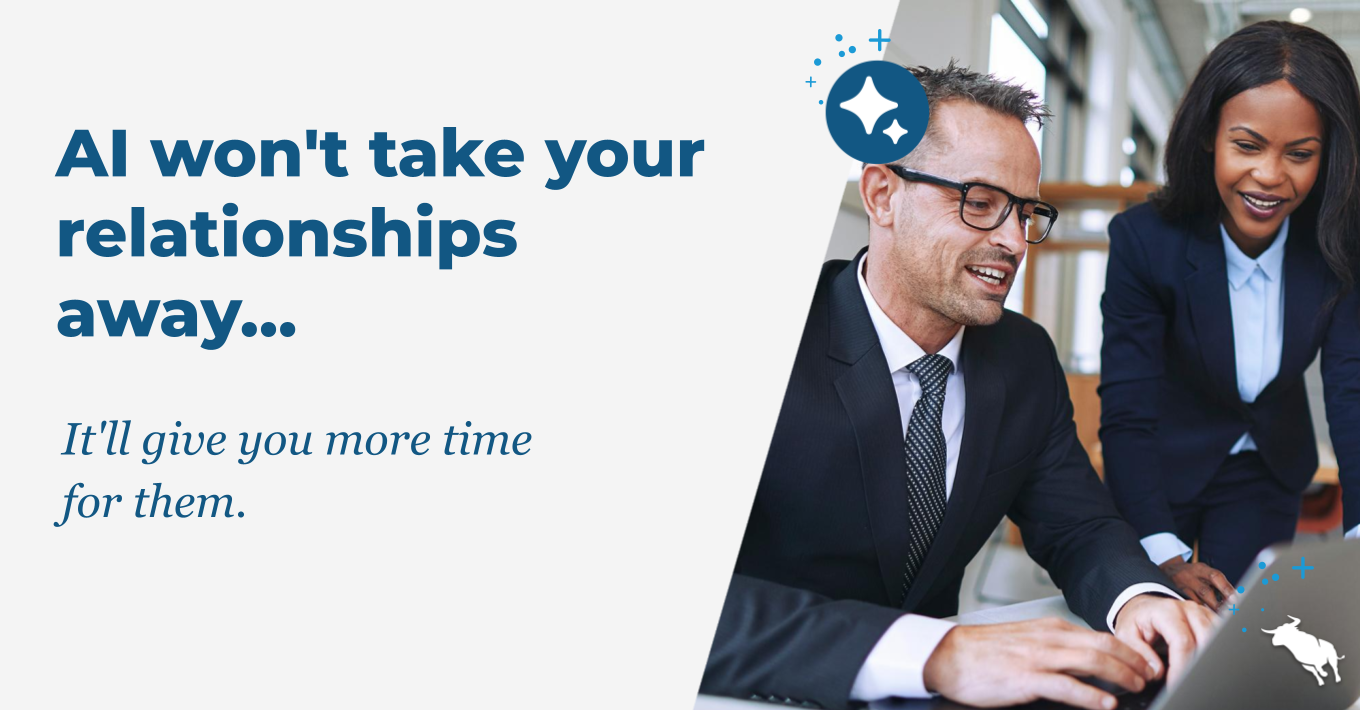
Small staffing firms win on human connection. Here’s how an AI recruiting platform gives you more time for the work that sets you apart from the bigger agencies.
Ask any small staffing firm what sets them apart, and you’ll hear the same answer: relationships. You know your clients by name. You know which candidates are ready to move and which ones just need the right conversation. You’ve built your reputation one placement at a time, and clients come back because working with you feels different from working with a big agency.
That edge is real. And in a market where candidates and clients have more options than ever, it matters more than ever too.
Running a small firm means the admin load doesn’t shrink to match your headcount. The minimum tasks exist regardless of size, whether that be candidate outreach, follow-ups, screening, scheduling, status updates, data entry, and your team is covering them while also wearing the hats that larger firms spread across dedicated staff. Automation has already helped small firms manage this reality, making it possible to operate at a scale that would have required significantly more headcount a decade ago. AI recruiting platforms and staffing software goes further. It handles the rote work automation already touches, and opens up capacity that small firms have never had access to before. When AI handles more of the work that pulls recruiters away from what they’re good at, they stay longer and perform better.
AI doesn’t change what makes your firm good. It gives you more time to do it.
The admin burden is the relationship problem
According to 2026 GRID data, 42% of SMB recruiters say their top desired benefit from AI is more time connecting with clients and candidates,higher than any other segment in the industry. That priority reflects something true about what makes small firms good at what they do. The challenge is protecting that focus when the day fills up fast.
Even the most organized, committed recruiters face the same reality: there are only so many hours, and the tasks that keep the operation running compete with the conversations that drive it forward. A recruitment CRM with AI doesn’t eliminate that tension, but it does shift the balance in taking on the work that doesn’t require a human so the work that does can get the attention it deserves.
What AI actually takes off your plate
The impact of AI on daily tasks is immediate and practical. A specific set of repeatable tasks that once required a recruiter’s time and attention simply stop requiring it.
AI handles candidate outreach and follow-up at scale, so no application goes unanswered and no warm lead goes cold.Our applicant tracking system and automation manages scheduling, status updates, and the back-and-forth that eats up a recruiter’s morning. AI assistants draft communications, surface candidate matches, and flag the activity that needs a human decision, so you spend your time on judgment calls, not data entry.
The results show up quickly. According to 2026 GRID data, 44% of SMB recruiters using AI report streamlined admin tasks as a direct impact on their day-to-day work. The candidate experience improves too: 31% of SMB firms report that AI helps talent move through the process more quickly, and 21% say candidates now receive a response to every application.something even the most attentive recruiter struggles to guarantee manually.
Revenue grows when friction goes away
There’s a direct line between clearing the admin burden and growing your business. 2026 GRID data shows that small firms using AI at any stage of the recruitment process are 2-3 times more likely to have grown revenue. One of the strongest indicators of that impact: among firms that report reduced backfill needs as a benefit of AI, 69% are seeing revenue gains. And when new recruiters do join, AI helps them get up to speed faster, contributing to the bottom line at a level that previously would have taken months to reach. In a small firm, momentum matters and a new hire who is placing candidates and building relationships within weeks rather than months keeps the whole operation moving forward.
The same principle applies day to day. When recruiters spend less time on tasks that don’t require human involvement, they spend more time on the ones that do,and those are the ones that drive placements, repeat business, and referrals. AI carries out the work, but recruiters stay in control: reviewing, directing, and making the calls that require experience and relationship knowledge. Decoupling revenue growth from headcount starts here.
Small firms have an advantage here that most don’t talk about
Adopting AI in a large firm is a project. There are legacy systems to migrate, processes to standardize across dozens of offices, IT sign-offs, and change management programs. It takes months, sometimes years, to see results.
In a small firm, it looks completely different. Leadership is close to the work and often doing it directly. Decisions happen fast. There are fewer systems to change and fewer people to bring along. When something works, you know within weeks, not quarters.
That proximity is a genuine advantage when it comes to driving AI adoption. According to 2026 GRID data, SMB firms whose leaders feel ready to lead AI transformation report 61% revenue gains, compared to 42% among those who don’t feel ready yet. And in a small firm, leadership readiness translates into action faster than anywhere else. There’s no steering committee to convince, no multi-office rollout to coordinate. When a leader decides to move, the firm moves with them.
The firms seeing the strongest results from AI adoption share a few things in common. Leaders model the behavior, visibly using AI tools in their own daily work rather than mandating adoption from a distance. Some start with an opt-in approach, letting early enthusiasts use the tools first and share their wins with the rest of the team, building trust before broadening the rollout. Others have built shared prompt libraries to reduce the learning curve for new users, making it easier for every recruiter to get value from the tools quickly.
For small firms, 29% of which cite lack of a clear AI strategy as their biggest cultural obstacle, these approaches are particularly well suited. You don’t need a formal change management program. You need a leader who uses the tools, a few early adopters who can show colleagues what’s possible, and a willingness to start with one workflow and build from there.
That agility isn’t a consolation prize for being small, it’s a genuine competitive edge in a market where speed of adoption is increasingly the difference between firms that are growing and firms that are waiting to grow. The firms seeing results from AI right now aren’t the ones with the most resources. They’re the ones that started.
The path forward doesn’t require a full overhaul. Start with one workflow, whether that’s candidate follow-up, screening, or client communications, get comfortable with the results, and build from there. That’s how small firms have always competed with larger ones: by moving faster and staying closer to the work.
The boutique advantage gets stronger, not weaker
There’s a version of the AI conversation that frames it as a threat to the personal, high-touch service that small firms are known for. That version is wrong.
AI handles the tasks that were never part of your value proposition. The relationship is still yours. The market knowledge, the candidate trust, the client partnership, none of that gets automated. What changes is how much time you have to invest in those things.
The small firms that protect their relational edge now, by removing the friction that’s been pulling their teams away from it, are the ones positioned to win when the market opens back up. Tight talent pools and fewer job reqs won’t last forever. When volume returns, the firms with strong client and candidate relationships will fill roles faster than anyone else.
What small firms have always had,the personal touch, the specialist knowledge, the relationships that make clients call you first,doesn’t go away with AI. It gets to be the focus again.
Bullhorn works the way small staffing firms do: starting lean, building on what works, and scaling as your business grows. See what’s possible for your firm.